Built-in templates, ready for your practice
Matter includes built-in letter templates you can use straight away and customise to suit your practice. Prepare client correspondence and service agreements from the case, with the details filled from your records.
You can also write your own templates or bring in the documents your team already uses. Every template is versioned, so you can update the wording and keep earlier revisions.
Import the letters and agreements you already use
Your practice has already put work into its correspondence. Import an existing letter or service agreement and Matter converts it into a reusable template, recreating your branding and design.
Keep the layout and look your clients recognise. Review the imported template, adjust the wording where needed, and reuse it for the next client.
Your branding, down to the details
Matter recreates the design of imported documents so your letters and agreements look like they belong to your practice.
You can also set up letter designs in Practice Settings. Control the page size, margins, fonts, colours, logo, headers, footers, and page numbering. A live preview shows short and multi-page letters so you can check the layout before sending.
Client details filled from the case
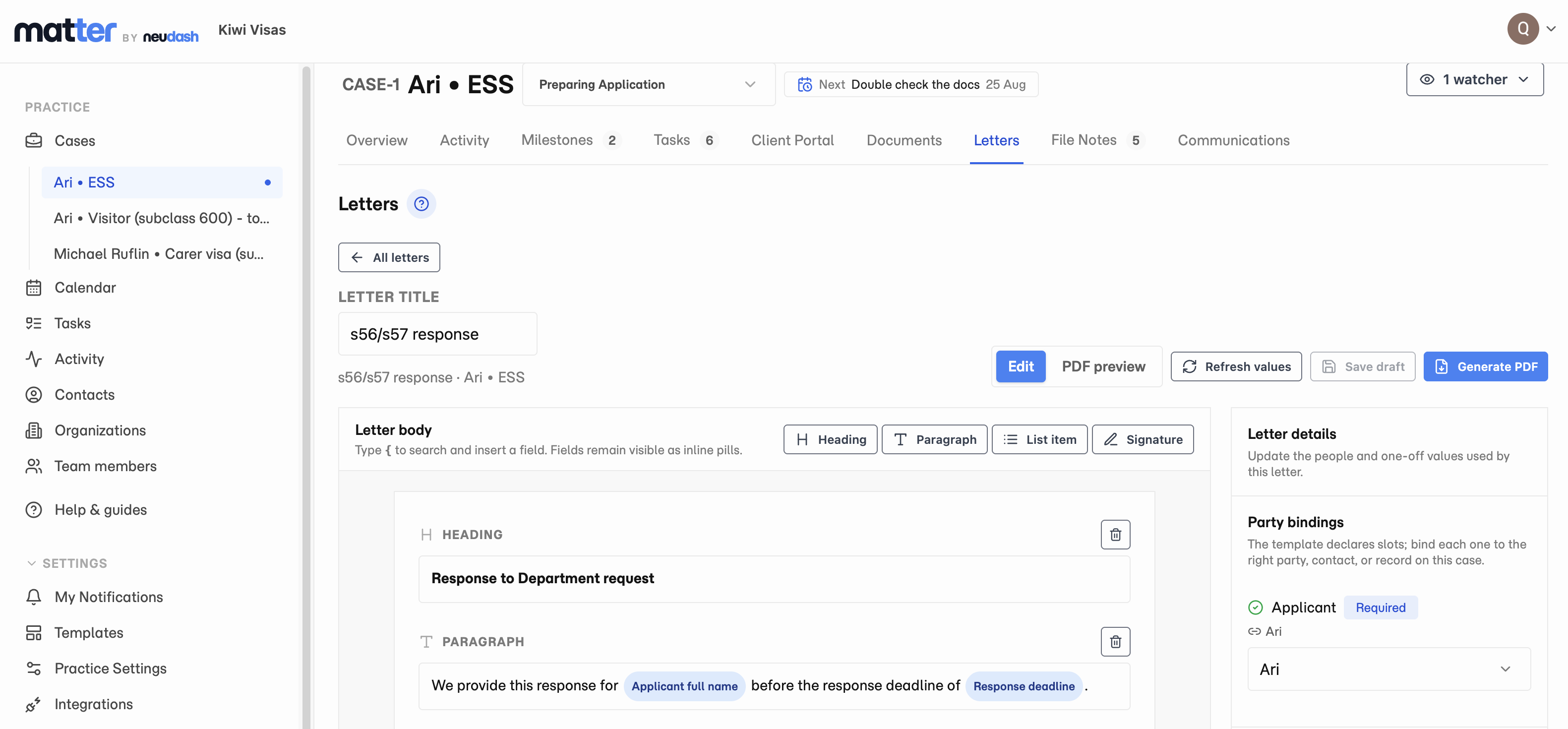
Choose a template in the case’s Letters tab and connect it to the people and organisations involved. Matter fills names, dates, reference numbers, and other details from the record.
When a record changes, the updated details flow into the next letter you generate. Your team can reuse the same template across cases without copying client information into a word processor.
Review, generate, and send for e-signing
The letter workbench shows your draft alongside any missing details. Preview the PDF and make the changes each client needs before generating the finished document.
Matter saves the PDF into the case document group you choose, ready to attach to an email from the case. For service agreements, send the prepared document for electronic signature through Matter.
Reuse the correspondence your practice sends every day
Use templates for service agreements, engagement letters, client advice, application submissions, and matter closure letters. Start with a built-in template or import your own, keep your practice’s design, and prepare each document from the case.